

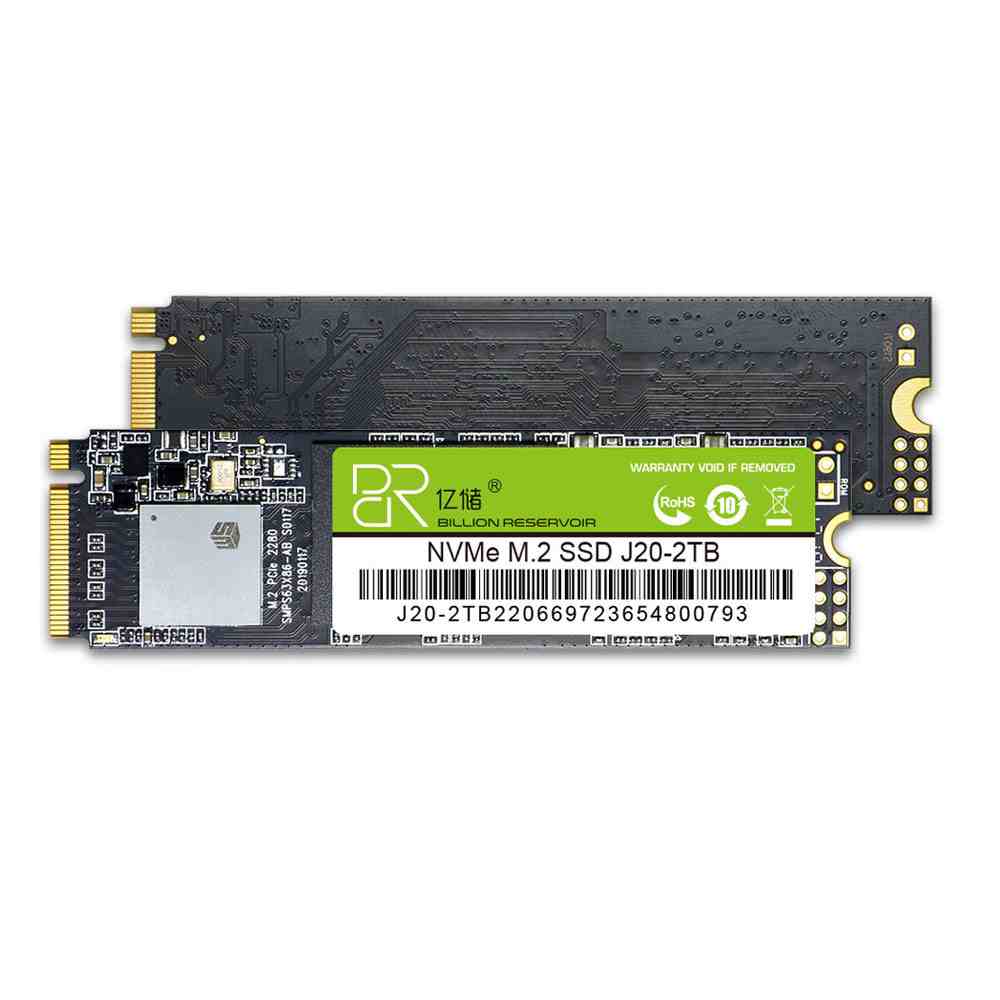
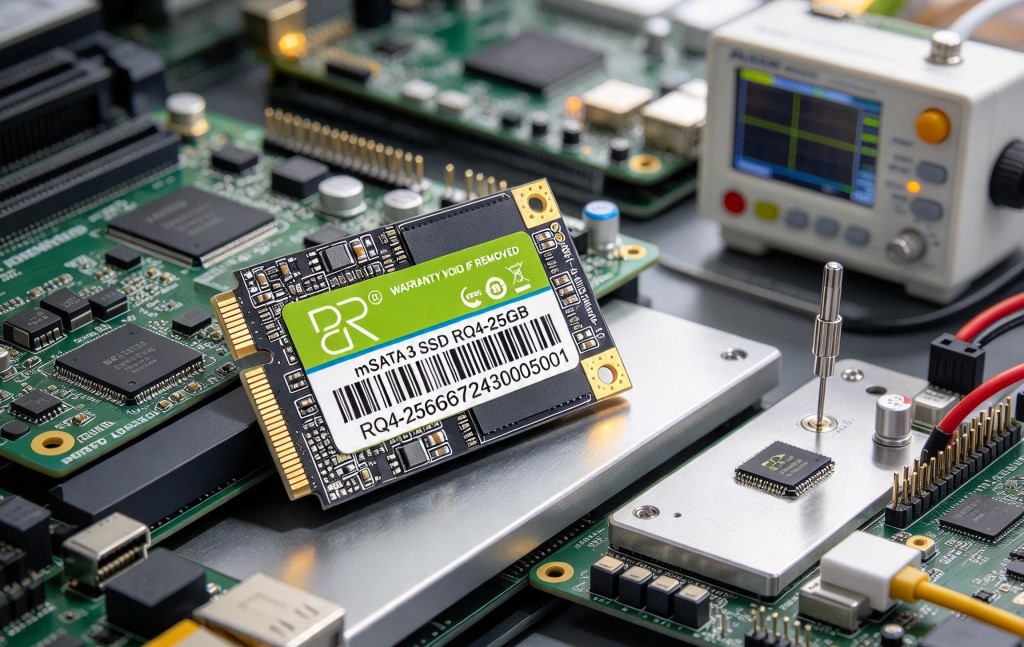
In modern electronics design, space constraints continue to challenge engineers who need reliable high-speed storage. A compact mSATA SSD for embedded applications addresses this challenge by delivering solid performance within a minimal footprint. The small form factor allows integration into devices where traditional 2.5-inch drives simply cannot fit. Furthermore, stable data transfer and consistent operation remain essential for systems that must run without interruption. Billionre has developed the RQ4 series to meet these exact requirements in both industrial and consumer environments.
Why Compact Size and Stability Matter Together
Space-limited platforms such as ultrabooks, industrial controllers, and embedded computing modules demand storage that does not compromise reliability. A compact mSATA SSD for embedded use combines the mSATA interface with a high-speed SATA III 6Gb/s connection, ensuring fast data access while occupying only a fraction of the volume of larger drives. In addition, the design supports optional 3D TLC or QLC NAND flash, giving manufacturers flexibility in balancing cost, capacity, and endurance. As a result, system builders can achieve both physical efficiency and dependable long-term performance.
Core Attributes That Support Reliable Operation
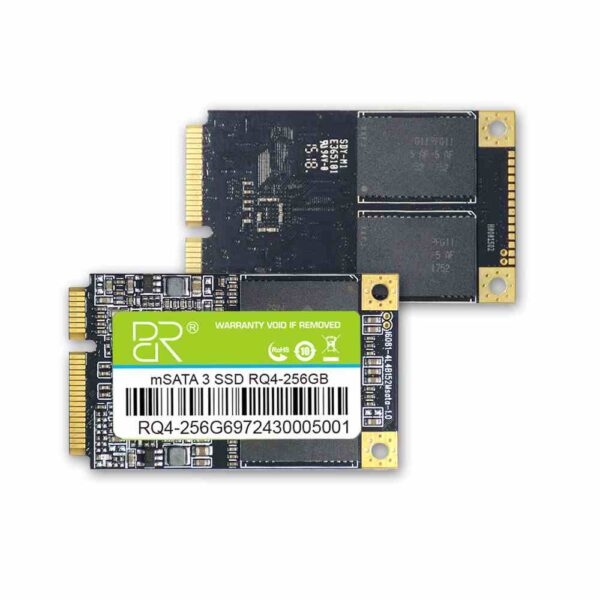
The ultra-compact 50 × 30 × 3.5 mm dimensions make installation straightforward even in densely packed enclosures. High-speed SATA III connectivity provides sequential transfer rates suitable for demanding workloads, while the chosen NAND configuration contributes to consistent read and write behavior. Moreover, careful thermal and power management helps maintain stable performance across varying environmental conditions. Therefore, the drive remains suitable for continuous operation in embedded systems that cannot afford unexpected slowdowns or failures.
Practical Benefits Across Target Applications
Several operational advantages become clear when the drive is deployed in real products. First, the small form factor frees valuable board space for other critical components. Second, the high-speed interface reduces data bottlenecks during system boot and application loading. Third, optional NAND choices allow fine-tuning of cost and endurance according to specific project needs. Fourth, proven stability supports both consumer ultrabooks and industrial embedded platforms. Taken together, these strengths help manufacturers deliver products that are both compact and dependable.
| Feature | Traditional Larger SSDs | Compact mSATA SSD for Embedded |
|---|---|---|
| Physical Footprint | Requires more chassis space | Ultra-small 50 × 30 × 3.5 mm design |
| Interface Speed | Often limited by older standards | Full SATA III 6Gb/s performance |
| Integration Flexibility | Harder to fit in thin devices | Ideal for ultrabooks and embedded boards |
| NAND Options | Usually fixed configuration | Optional 3D TLC / QLC for cost balance |
| Target Use Cases | General desktop and laptop | Embedded systems and space-critical designs |
The comparison above shows why the compact format delivers clear advantages for modern product development.
Supporting Long-Term Reliability in Demanding Environments
Stable performance depends on more than raw speed. Careful controller design and consistent firmware behavior help the drive maintain predictable latency and low error rates over extended periods. In addition, the compact mSATA SSD for embedded applications undergoes rigorous validation to ensure it meets the expectations of industrial and commercial customers. Furthermore, the combination of small size and reliable operation makes the solution attractive for OEMs who must balance performance targets with strict mechanical constraints. Consequently, design teams gain a storage option that supports both current projects and future product iterations.
Meeting the Needs of OEM and System Builders
Manufacturers working on ultrabooks, industrial PCs, and specialized embedded equipment require storage that integrates smoothly and performs consistently. The RQ4 series provides exactly this combination through its compact mSATA form factor and high-speed interface. Moreover, flexible capacity options ranging from lower densities to higher capacities allow precise matching to application requirements. Therefore, the drive serves as a practical foundation for products that demand both space efficiency and operational stability. Billionre continues to focus on these balanced characteristics so that customers can bring reliable systems to market with confidence.
In summary, a compact mSATA SSD for embedded use offers an effective answer to the dual demands of minimal size and dependable performance. By pairing a high-speed 6Gb/s interface with a truly small footprint and flexible NAND choices, the solution supports a wide range of modern electronics designs. Engineers and product managers who prioritize both spatial efficiency and long-term reliability will find this approach well suited to the challenges of today’s compact computing platforms.