

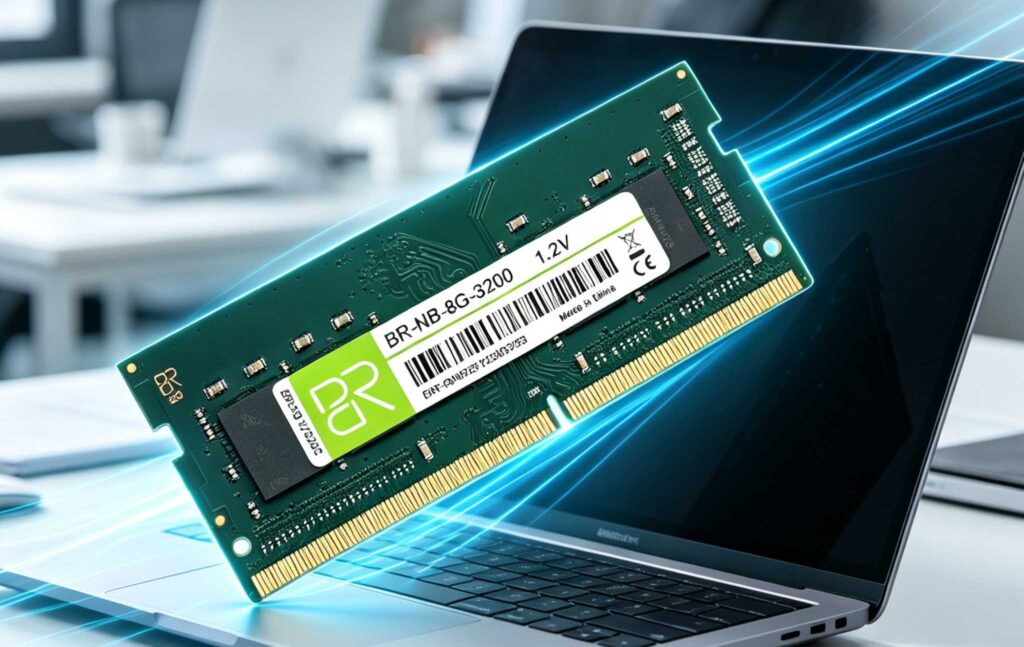
Modern laptops need to balance performance, portability, and energy efficiency. As processors become faster and applications become more demanding, memory modules must handle larger workloads without creating unnecessary power consumption. Therefore, low-voltage memory has become an important consideration for mobile computing. A 1.2v ddr4 sodimm desktop memory solution combines DDR4 technology with a 1.2V operating voltage, providing high-frequency performance while helping reduce memory power requirements.
Why Memory Voltage Matters
Memory modules require electrical power to operate, and voltage is one of the factors that influences overall memory power consumption. When a system uses lower operating voltage, it can reduce the energy required by the memory subsystem under comparable operating conditions. Consequently, low-voltage memory can contribute to more efficient system operation. The DDR4 standard introduced a lower operating voltage compared with earlier DDR generations. With a nominal voltage of 1.2V, DDR4 memory can provide a useful balance between performance and energy efficiency. Therefore, it is well suited to laptops and other systems where power management is important.
How 1.2V DDR4 Supports Battery Efficiency
Laptop battery life depends on many components, including the processor, display, storage, wireless connectivity, and memory. Although memory is only one part of total system consumption, efficient memory operation can contribute to overall power management. A 1.2v ddr4 sodimm desktop module operates at a relatively low voltage while supporting high-frequency and high-bandwidth performance. Furthermore, efficient memory can reduce unnecessary energy demand during everyday workloads. As a result, users may benefit from a better balance between computing performance and battery efficiency, depending on the overall system design.
DDR4 Performance for Everyday Multitasking
Low power consumption should not mean sacrificing useful computing performance. Modern users frequently switch between browsers, office applications, communication platforms, media tools, and other programs throughout the day. DDR4 memory provides high-frequency operation and strong bandwidth to support these workloads. Therefore, systems equipped with suitable DDR4 modules can handle multitasking more smoothly. In addition, adequate memory capacity helps reduce the need for frequent data movement between memory and slower storage.
Key Benefits of 1.2V DDR4 Memory
Low-voltage DDR4 memory provides several practical advantages for compatible computing systems:
- 1.2V operating voltage: Helps support efficient memory operation.
- High frequency: Provides responsive performance for everyday computing.
- High bandwidth: Supports data-intensive multitasking workloads.
- Broad system application: Suitable for compatible laptop and desktop platforms.
- Reliable raw materials: Carefully selected components support consistent quality.
- Stable multitasking: Helps systems manage multiple applications efficiently.
- Up to 32GB capacity kits: Provides flexible memory expansion options.
Product Specifications at a Glance
| Feature | D4 NB Specification | Benefit |
|---|---|---|
| Memory Type | DDR4 DRAM | Modern memory platform |
| Operating Voltage | 1.2V | Supports power efficiency |
| Performance | High Frequency | Responsive computing |
| Bandwidth | High Bandwidth | Efficient data handling |
| System Support | Desktop & Laptop Systems | Flexible compatibility |
| Capacity | Up to 32GB Kits | Supports memory expansion |
| Components | Selected Raw Materials | Stable quality |
| Main Application | Multitasking & Computing | Reliable daily performance |
SODIMM Design for Compact Systems
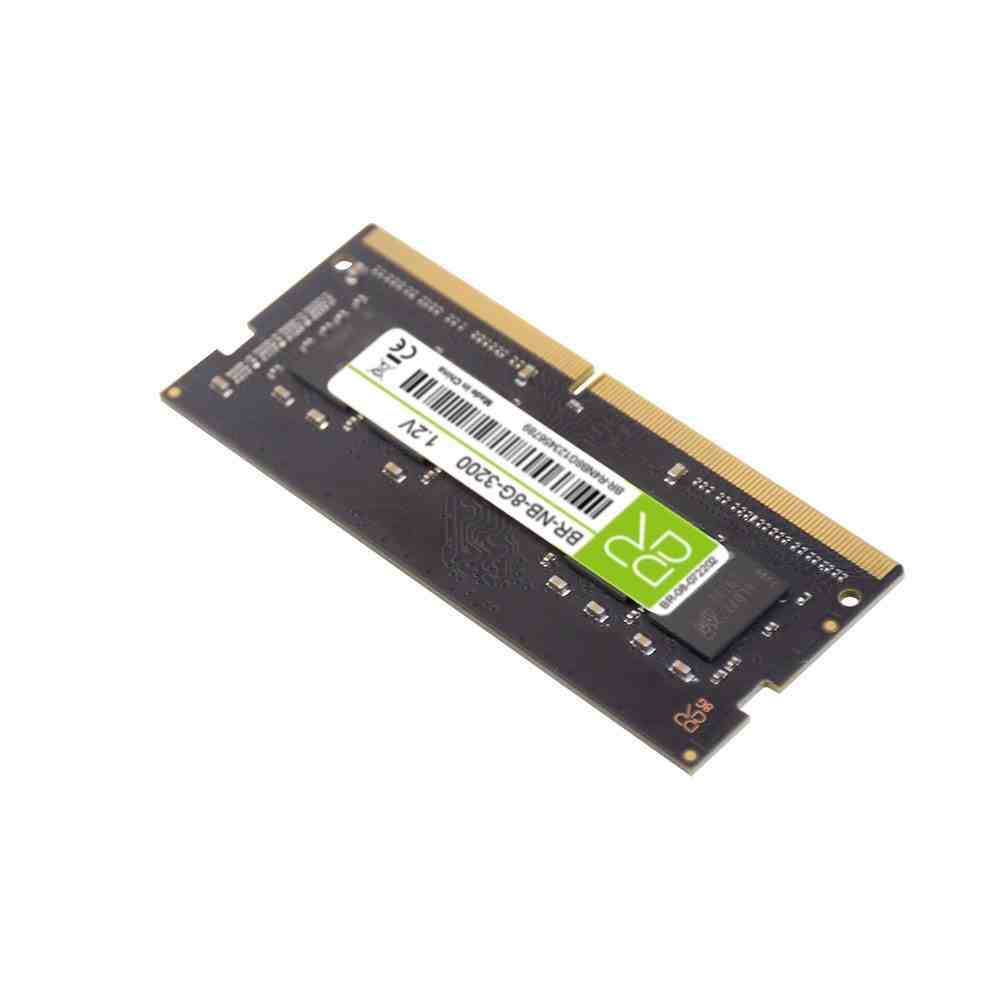
Laptops have limited internal space, so their memory modules need to provide useful capacity without requiring the physical dimensions of larger desktop memory formats. SODIMM modules are designed specifically for compact computing systems. As a result, DDR4 SODIMM memory is commonly used in laptops and other small-form-factor devices. The compact module design allows manufacturers to integrate memory into space-constrained systems while maintaining the performance characteristics expected from DDR4 technology.
High Frequency and High Bandwidth
Memory frequency and bandwidth can influence how quickly a system moves data between the processor and memory. Higher bandwidth can be particularly useful when multiple applications access memory simultaneously. The D4 NB series is designed with high-frequency and high-bandwidth performance in mind. Furthermore, suitable memory performance can support smoother application switching and data processing. Therefore, the module can help create a responsive computing experience when paired with compatible hardware.
Capacity Matters for Multitasking
Memory capacity is another important factor in system performance. When available RAM becomes insufficient, the operating system may rely more heavily on storage for temporary data, which can affect responsiveness.
The D4 NB supports capacity kits up to 32GB, providing users and system integrators with flexible expansion options. Consequently, systems can be configured to handle more demanding multitasking requirements. For users working with multiple applications, larger memory capacity can help maintain a smoother workflow.
Strictly Selected Raw Materials
Memory stability depends not only on the memory architecture but also on the quality and consistency of the components used during production. Therefore, selecting appropriate raw materials is an important part of developing reliable memory modules. The D4 NB uses strictly selected raw materials to support consistent performance and reliability. Moreover, careful component selection can help maintain stable operation across different workloads. As a result, the memory module is suitable for applications where dependable everyday performance is important.
Supporting Laptop Battery Life
Battery efficiency is a major consideration for mobile professionals, students, travelers, and remote workers. Every component inside a laptop contributes to the overall energy budget, so efficient hardware design can help optimize battery usage. A 1.2v ddr4 sodimm desktop memory module uses a 1.2V operating voltage, which supports lower-voltage memory operation compared with higher-voltage memory technologies. However, actual battery life depends on the complete hardware configuration and workload. Therefore, low-voltage memory should be viewed as one part of a broader system-level power strategy.
Suitable for Desktop and Laptop Systems
Although SODIMM memory is commonly associated with laptops and compact computers, the D4 NB product line is positioned for both compatible desktop and laptop systems. However, users should always verify memory type, form factor, capacity limits, frequency support, and motherboard compatibility before installation. This flexibility can be useful for system builders and upgrade projects that require different memory configurations. Furthermore, compatibility-focused selection helps ensure that the memory operates correctly within the target platform.
Stable Performance for Modern Workloads
Modern computing often involves simultaneous applications, cloud services, browser tabs, video playback, and productivity software. Therefore, stable memory performance is essential for maintaining a responsive user experience. The D4 NB combines DDR4 technology, high-frequency operation, high bandwidth, and flexible capacity options. As a result, it can support multitasking environments where users need reliable access to memory resources throughout the working day.
Why Low Voltage and Performance Can Work Together
There is often a misconception that lower voltage automatically means lower performance. In reality, memory performance depends on multiple factors, including architecture, frequency, timing, bandwidth, and system compatibility. DDR4 demonstrates how a lower operating voltage can coexist with strong performance characteristics. The 1.2v ddr4 sodimm desktop design combines 1.2V operation with high-frequency and high-bandwidth capabilities. Therefore, it provides an effective balance for systems that need both performance and energy-conscious operation.
A Practical Choice for System Upgrades
Memory upgrades can be one of the most practical ways to improve a computer’s multitasking capability. When users frequently encounter slowdowns caused by limited RAM, increasing memory capacity can provide additional resources for applications and background processes. With capacity kits reaching up to 32GB, the D4 NB offers flexible options for different computing requirements. Moreover, its DDR4 architecture makes it suitable for compatible systems that need modern memory performance. Billionre focuses on memory products designed to provide stable and practical performance for a variety of computing applications.
Conclusion
Efficient memory design plays an important role in modern laptop and desktop computing. A lower operating voltage can help support power-conscious system design, while high frequency and bandwidth provide the performance needed for multitasking and demanding applications. Ultimately, the 1.2v ddr4 sodimm desktop combines 1.2V low-voltage operation with DDR4 performance, flexible capacity, and carefully selected components. With support for high-frequency operation, high bandwidth, and capacity kits up to 32GB, the D4 NB provides a balanced memory option for compatible laptops, desktops, and compact computing systems. By combining efficiency with dependable performance, low-voltage DDR4 memory can contribute to a more responsive and energy-conscious computing experience.